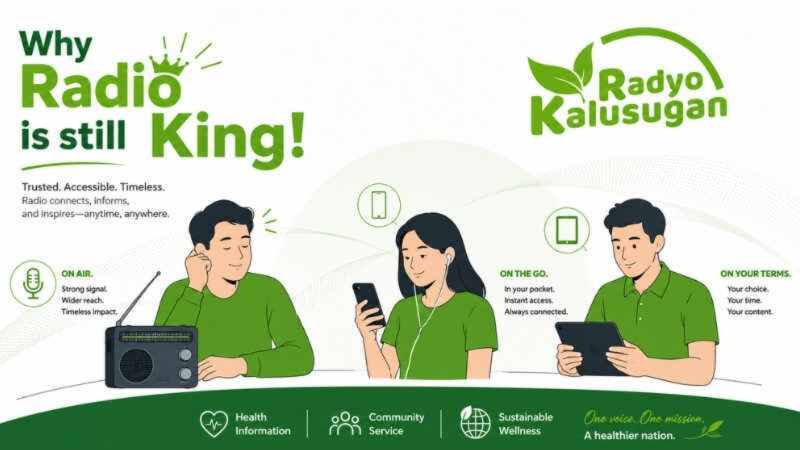
Despite the rapid rise of social media, streaming platforms, and digital technologies, radio continues to stand as one of the most trusted, accessible, and influential forms of communication in the world.
For decades, radio has remained deeply embedded in everyday life — reaching people in homes, public transport, workplaces, rural communities, and even remote areas where internet connectivity remains limited. Unlike many modern platforms that require expensive devices or stable data connections, radio remains simple, affordable, immediate, and accessible to millions.
Its strength lies not only in technology, but in trust.
Radio delivers real-time information, emergency updates, education, entertainment, public service announcements, and community engagement in a direct and personal manner. During disasters, health emergencies, and national crises, radio consistently proves to be one of the most reliable communication platforms available.
In the Philippines, radio continues to play a vital role in public information and community development.
Among the organizations helping redefine modern broadcasting is Radyo Kalusugan — Asia’s first health-focused radio station dedicated to health awareness, medical education, wellness advocacy, and community service.
Broadcasting 24 hours a day from its studios in Pasay City, Philippines, Radyo Kalusugan combines traditional radio with digital and social media platforms to expand public access to trusted health information and community-centered programming.
The station is currently heard on:
• 90.9 FM in Panabo City
• 90.3 FM in Bukidnon
• 103.1 FM in CALABARZON
Radyo Kalusugan is also a proud member of the Kapisanan ng mga Broadkaster ng Pilipinas (KBP), reflecting its commitment to responsible broadcasting standards and public service excellence.
As part of the IBS Media Group, the platform continues to innovate by integrating radio, digital broadcasting, online engagement, and community outreach initiatives — proving that radio remains relevant even in the modern digital age.
What makes radio unique is its human connection.
Unlike algorithm-driven feeds and fast-moving social content, radio creates familiarity, trust, and companionship between broadcasters and listeners. It reaches audiences while driving, working, traveling, or resting — becoming part of people’s daily routines and communities.
For health-focused broadcasting in particular, radio remains one of the most effective tools for:
• Public health education
• Emergency health advisories
• Community awareness campaigns
• Medical mission coordination
• Wellness advocacy
• Disaster communication
As technology evolves, radio itself continues to evolve alongside it. Today’s radio is no longer limited to FM frequencies alone — it now extends through livestreaming, mobile phones, tablets, smart devices, and social media platforms, allowing stations to reach wider audiences worldwide.
The continued success of platforms like Radyo Kalusugan demonstrates that radio is far from obsolete. Instead, it remains one of the world’s most resilient and adaptable communication mediums — trusted, accessible, and capable of creating meaningful impact across communities.
To learn more, visit:
www.RadyoKalusugan.com